Exploring Ideas, Embracing Perspectives – One Thought at a Time
The Ripple Effect: How Parents Shape Their Child’s Educational Journey
Spread the love
Parents shape their child’s educational journey profoundly from early development to significant academic milestones. Creating a supportive environment, role-modelling educational values, open communication, and fostering independence are key methods. Investments in quality time, positive engagement, celebrating effort over perfection, open dialogue, and promoting independence ensures a successful educational journey, remembering that a parent’s involvement can be the catalyst for a lifelong love of learning.
Spread the love
By Prabhash Chandra Jha
Introduction:
In the grand tapestry of a child’s life, parents are the primary weavers, shaping the patterns of their offspring’s future. When it comes to education, this influence is particularly profound. From the earliest stages of development to the momentous milestones of academic achievement, parents play a pivotal role in shaping their child’s educational journey.
The Foundation: Early Childhood Development
The foundation of a child’s educational success is laid in the early years of life. Parents serve as the architects of cognitive, emotional, and social development. From reading bedtime stories to engaging in imaginative play, these seemingly simple activities set the stage for a love of learning.
A supportive home environment is like fertile soil for a growing mind. Parents who actively participate in their child’s learning create an atmosphere where curiosity is nurtured. Encouraging questions, providing resources, and being actively involved in homework are ways parents contribute to a positive educational environment.
Children are keen observers, and parents are their first role models. How parents approach challenges, problem-solving, and their own pursuit of knowledge leaves an indelible mark on a child’s mindset. Parents who emphasize the value of education through their own actions inspire their children to follow suit.
Open lines of communication between parents and children are vital for a successful educational journey. Actively listening to a child’s concerns, discussing academic progress, and providing a safe space for expressing thoughts contribute to a strong support system. This communication fosters a sense of security that is essential for optimal learning.
Encouraging Independence: Fostering a Growth Mindset
As children navigate the challenges of education, parents can empower them by fostering a growth mindset. Encouraging resilience in the face of setbacks, celebrating effort, and highlighting the importance of learning from mistakes all contribute to a child’s ability to face academic challenges with confidence.
In the grand symphony of a child’s education, parents compose the melody that resonates throughout their lives. The impact of parental involvement is far-reaching, influencing not only academic success but also shaping character, resilience, and a lifelong love of learning.
As parents, educators, and caregivers, recognizing the profound influence we wield in the educational sphere empowers us to actively contribute to the flourishing of the next generation.
So, what can you do to ensure your child’s educational journey is filled with harmony and success?
Invest Quality Time: Recall the bedtime story mentioned earlier? Make it a nightly ritual. Share anecdotes from your own life that impart valuable lessons. These shared moments build bonds and instill a love for stories and learning.
Create a Learning Oasis: Turn a corner of your home into a dedicated learning space. Make it inviting with colorful posters, educational games, and a cozy reading nook. This visual cue signals that learning is not confined to the classroom but extends into the heart of your home.
Celebrate Progress, Not Just Perfection: Share stories of your own failures and triumphs. Emphasize the importance of effort and perseverance. Maybe recount a time when you faced a tough challenge and how you overcame it, imparting the lesson that setbacks are stepping stones to success.
Open Dialogue: Initiate conversations about your child’s day, their struggles, and triumphs. Share your own experiences with learning and the joy it brings. This open dialogue fosters a sense of trust, making your child feel comfortable seeking guidance when faced with academic hurdles.
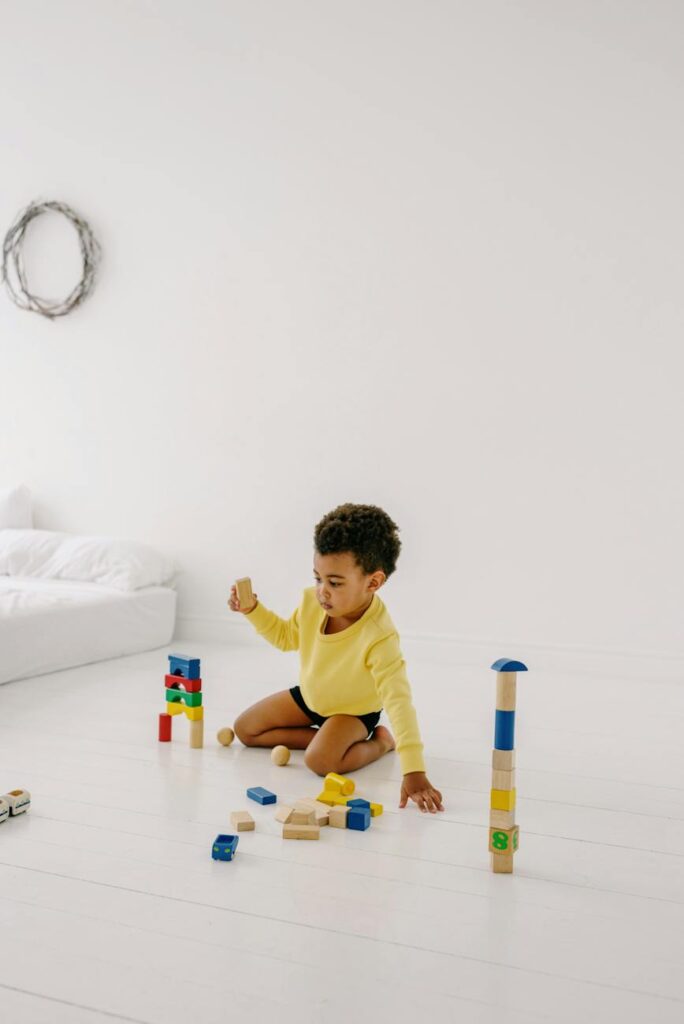
Empower Independence: Remember the image of the child learning independently? Encourage your child to take the lead in their education. Provide choices in their learning path, allowing them to explore subjects that ignite their curiosity.
The seeds planted today will grow into the forests of tomorrow. Let’s nurture the minds of the future with the care and intentionality they deserve.
Your action today could be the catalyst for a lifelong love of learning in your child. Start weaving the fabric of their educational journey now.
Remember, the most beautiful gardens are those tended with love, patience, and attention. Your involvement in your child’s education is the nourishment that will help them bloom into the incredible individuals they are meant to be.
Author: Prabhash Chandra Jha
I am Prabhash Chandra Jha, and over the years, I have come to understand that I am not merely a teacher standing before a classroom—I am a seeker, quietly walking through the corridors of human understanding.
My journey in education did not begin with deep philosophy. It began with structure—lesson plans, objectives, content delivery. But classrooms have a way of dissolving structure and revealing truth. Slowly, I began to notice what was never written in any textbook—the silence behind confidence, the hesitation behind correctness, the invisible weight carried by young minds.
And in that noticing, something within me shifted.
I realized that teaching is not the act of speaking. It is the art of seeing.
There are days when a classroom appears calm, disciplined, and productive. Yet beneath that surface, many children are negotiating with their own fears, doubts, and comparisons. Some speak loudly to be heard. Some remain silent, waiting to be seen. And some quietly withdraw, believing they do not belong.
It is in these unseen spaces that teaching truly begins.
> Not every child who listens understands,
Not every child who is silent is at peace.
In the quiet corners of a classroom—
Lives a world waiting for release.
I began to question myself—not as a teacher, but as a human being.
Am I responding, or merely reacting?
Am I observing, or merely looking?
Am I teaching, or simply completing?
These questions did not make my journey easier. But they made it more honest.
I found myself drawn toward the deeper essence of education, something our ancient wisdom has always reminded us of:
> “सा विद्या या विमुक्तये”
True education is that which liberates.
Liberates—from fear, from comparison, from limitation.
In this light, education is no longer about information. It becomes transformation.
Through my experiences, I have come to believe that every child carries an inner universe—subtle, complex, and often unexpressed. And unless I learn to enter that universe with sensitivity, I remain only an instructor of subjects, not a facilitator of growth.
This understanding found its expression through my writing on Prabhash.blog.
I do not write as someone who has all the answers. I write as someone who has learned to sit with questions.
My reflections emerge from real classrooms—from moments where I paused instead of reacted, where I listened instead of instructed, where I observed instead of assumed. Each piece of writing is an attempt to bridge the distance between what we do as teachers and what we truly intend.
> I entered the classroom to teach a lesson,
But stayed back to understand a life.
Somewhere between instruction and silence—
I found meaning beyond the strife.
My thoughts resonate deeply with the vision of the National Education Policy 2020, which speaks of holistic development, emotional well-being, and child-centered learning. Yet, beyond policies, I believe transformation begins within the teacher—with awareness, with reflection, with the courage to see beyond the obvious.
Philosophically, I find myself anchored in a simple yet profound truth:
> “आत्मानं विद्धि” — Know thyself.
The more I understand myself—my biases, my expectations, my responses—the more I am able to understand my students. Teaching, then, becomes a shared journey of discovery.
It is no longer one guiding many.
It becomes many journeys unfolding together.
There are moments when I feel that the classroom is not a place of control, but a space of consciousness. Where every interaction carries energy. Where every word leaves an imprint. Where every silence speaks.
And in that awareness, teaching transforms into something deeply human.
> Not in authority, not in command—
But in the warmth of a guiding hand.
Not in perfection, not in control—
But in touching quietly, the human soul.
I did not begin this journey to teach.
I began it to understand.
And somewhere along the way, in understanding others, I found fragments of myself—refined, reshaped, and redefined.
Today, when I stand in a classroom or write on my blog, I do so not as someone who has reached a destination, but as someone who continues to walk—with curiosity, with humility, and with a deep sense of responsibility.
Because teaching, I have realized, is not what I give.
It is what remains.
View all posts by Prabhash Chandra Jha