
By-Prabhash Chandra Jha

What Parent Conversations Taught Me About Teaching
There is a moment in every school day that rarely gets recorded.
It does not appear in lesson plans.
It is not reflected in report cards.
It is not discussed in academic meetings.

And yet—
it shapes everything.
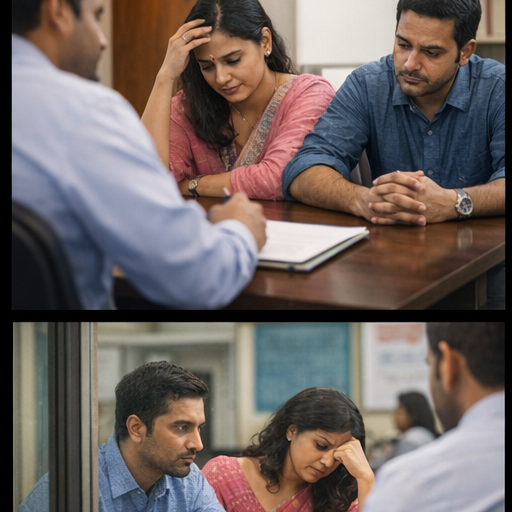
It is the moment when a parent sits across from a teacher.
I have sat in that chair countless times.
Sometimes confident.
Sometimes prepared.
Sometimes certain that I knew what I would say.
And yet, again and again, I realized—
no two conversations are ever the same.
Because no two parents come with the same story.
The Meeting That Is Never Just a Meeting
On the surface, a parent-teacher meeting looks simple.
We talk about marks.
We discuss behavior.
We suggest improvement.
But beneath that—
There is something deeper moving.
A father measuring outcomes.
A mother seeking reassurance.
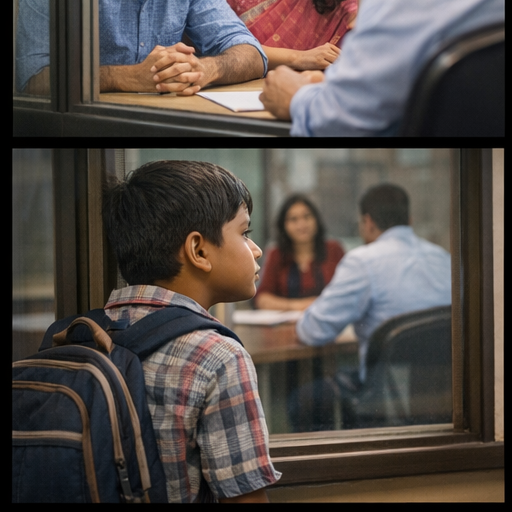
A child silently observing everything.
And a teacher—
trying to hold all of it together.
What I Learnt Slowly
In the beginning, I focused on answers.
- Explaining performance
- Justifying decisions
- Clarifying expectations
But over time, something changed.
I began to observe more than I spoke.
And I realized—
Most parents are not asking questions.
They are expressing something they themselves may not fully understand.
Behind Every Question
When a parent asks:
“Why are marks low?”
It is not always about marks.
It could be:
- Fear of failure
- Comparison with others
- Concern about the future
When a parent says:
“I am not satisfied.”
It is not always dissatisfaction.
It could be:
- Lack of clarity
- Need for reassurance
- Desire to feel involved
And when a parent raises their voice—
It is rarely anger alone.
It is often anxiety that has found volume.
The Silent Language of the Room
Over time, I stopped listening only to words.
I started watching:
- The way a parent sits
- The pauses between sentences
- The eyes that look away before speaking
Because the body speaks before the voice does.
A leaning posture reveals urgency.
A tightened jaw reveals restraint.
A silence reveals more than a long explanation.

And I began to understand—
If I respond only to words,
I miss the conversation.
The Teacher’s Real Challenge
The real challenge is not handling parents.
It is handling ourselves in front of parents.
There are moments when:
- A question feels like a challenge
- A tone feels disrespectful
- A comparison feels personal
And in those moments,
the instinct is to react.
But I learned something slowly—
Reaction closes conversations.
Awareness opens them.
The Pause That Changes Everything
There is a small space between:
What we hear
and
What we say.
Most of us rush through it.
But when I began to pause—
even for two seconds—
something changed.
My tone softened.
My words became clearer.
The room became calmer.
And I realized—
Control is not in speaking quickly.
It is in choosing when to speak.
What Parents Really Need
Over the years, I have met every kind of parent.
- The demanding one
- The anxious one
- The silent one
- The over-involved one
- The completely absent one
And yet, beneath all these forms,
their needs are surprisingly similar.
They want:
- To feel heard
- To feel respected
- To feel that their child is understood
And when these needs are met—
even partially—
the tone of the conversation changes.
The Child in the Middle
There is something I remind myself in every difficult meeting.
There is a child in the room.
Even if they are not physically present.
Because what we say—
and how we say it—
will reach them.
They may forget the marks discussed.
But they will remember:
- Whether their parent was calm or anxious
- Whether their teacher was patient or defensive
And from that,
they will form their understanding of school.
What This Journey Changed in Me
Over time, I stopped trying to:
- Win conversations
- Prove correctness
- Defend every point
And I started trying to:
- Understand before responding
- Balance before explaining
- Stabilize before solving
Because I realized—
A good conversation does not end with agreement.
It ends with understanding.
A Small Realization
Not every meeting will go perfectly.
Not every parent will be satisfied.
Not every situation will resolve immediately.
But if, in that interaction:
- The tone remains respectful
- The space remains safe
- The child remains protected
Then something important has already been achieved.
A Final Thought
Between the bell that starts a class
and the heart that carries a child—
there exists a space.
It is not filled with textbooks.
It is filled with conversations.
And how we handle those conversations
defines not just our effectiveness as teachers—
but our impact as human beings.
Closing Lines
Not every lesson is written on the board,
some are lived in moments,
and in those quiet exchanges,
education finds its true meaning.
